


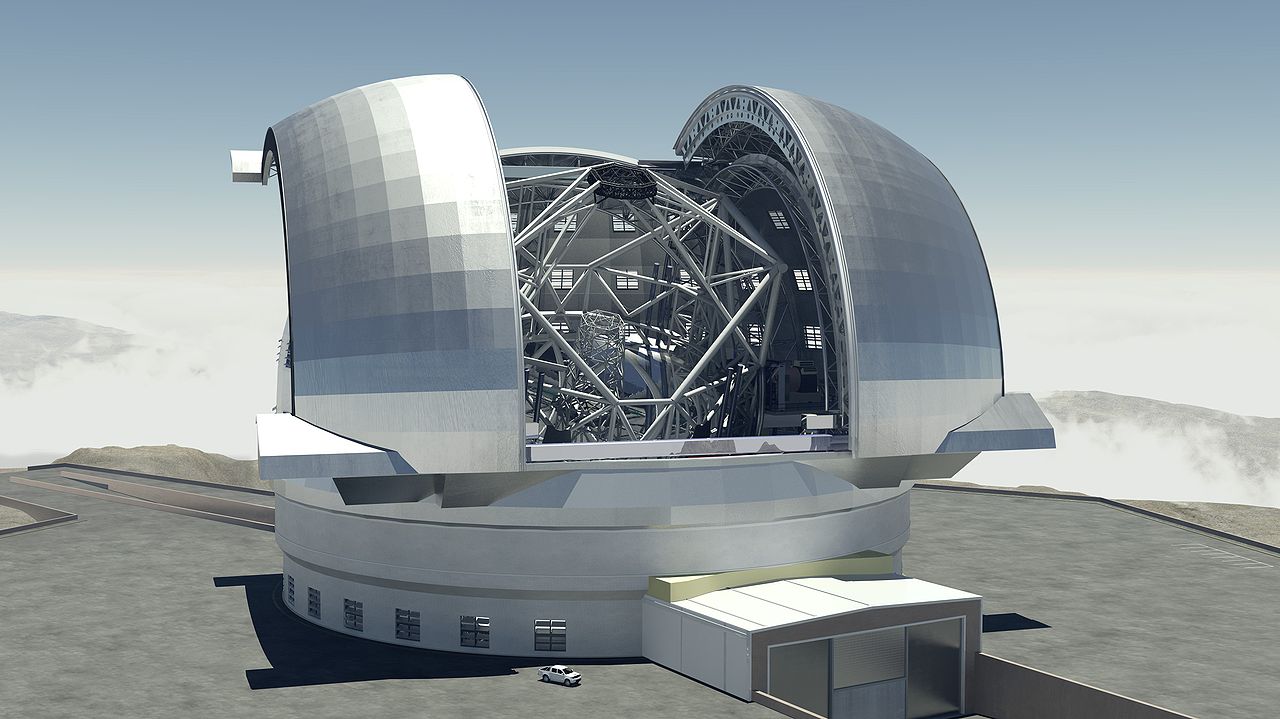
The European Extremely Large Telescope: Preview of star images and angular resolution
7 February 2025 @ 7:30 pm - 9:30 pm GMT
Talk by Dr T. Stewart McKechnie. We will also have the Sky in February.
Depending on the seeing conditions and the performance of the Adaptive Optics (AO) system, star images obtained by the European Extremely Large Telescope (E-ELT) will appear in a wide variety of shapes and sizes. Sometimes they will be sharp and well defined. At other times, less so. But when diffraction is considered, the E-ELT’s immense (39.3-metre) diameter in combination with the huge imaging wavelength band requirement (0.4-µm to 20.0-µm) produce an astonishing diversity of star images. Computer-generated images preview the sort of images to expect. E-ELT angular resolution can be calculated directly from individual star images using the Rayleigh criterion, whereby any (equal brightness) binary star is deemed just-resolved when the intensity in the center of the binary image is 26.5% less than in the twin peaks. Evaluations show E-ELT resolution as extraordinarily wavelength-dependent.