


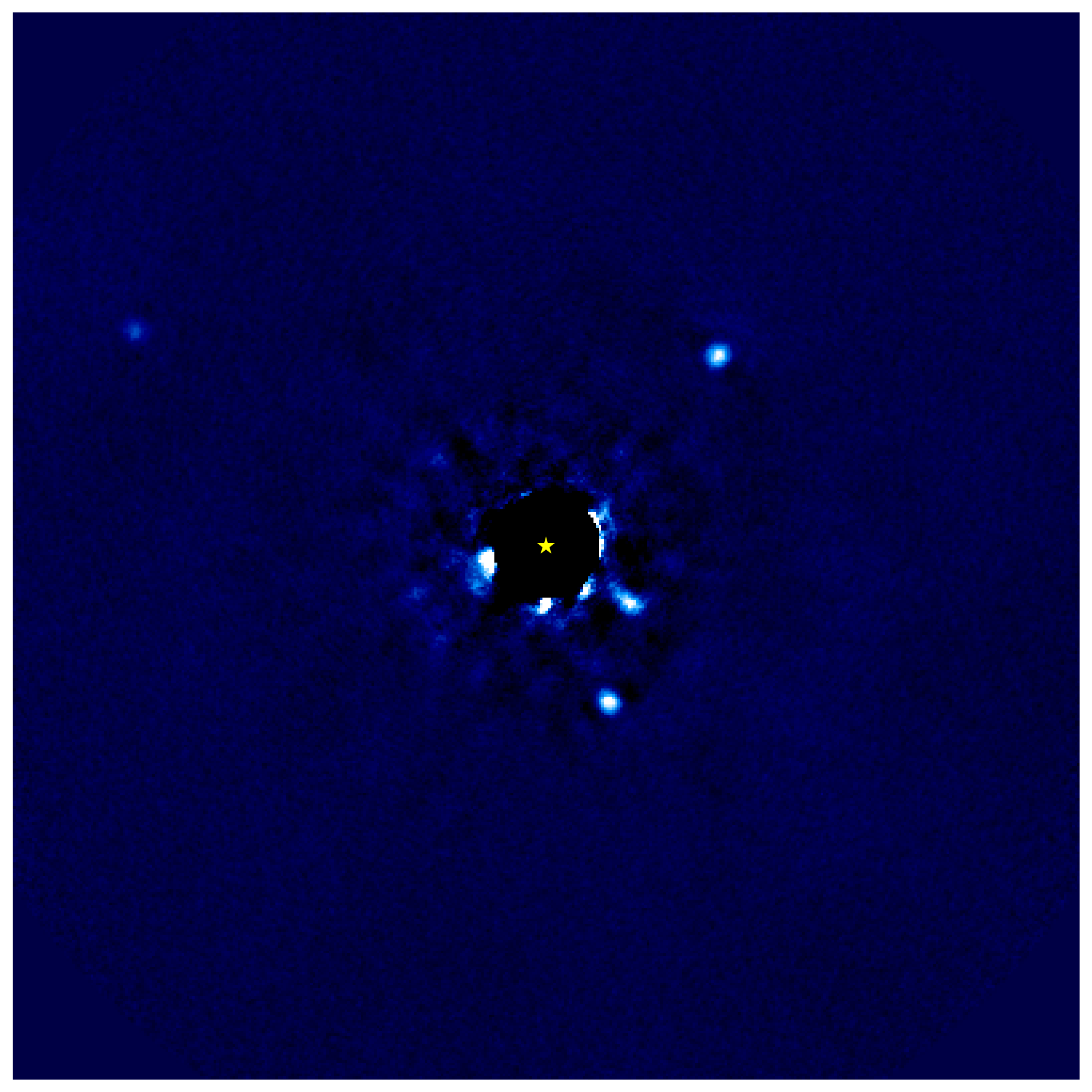
Real Images of Exoplanets
17 January 2025 @ 7:30 pm - 9:00 pm GMT
Talk by Dr Jason Wang.
We have discovered over 4000 planets orbiting other stars. Most of these exoplanets are detected indirectly by measuring the effect each has on its star, so we are unable to take images of them and must rely on artist conceptions to visualize them. Imaging exoplanets is difficult because the bright diffracted glare of the star buries the faint light of the planet. I will discuss how we have been able to take images of some of these worlds by using the largest telescopes in the world combined with specialized optics and signal-processing techniques. I will show the dozen or so planets we have imaged. I will discuss what we learn from studying these planets directly and the prospects of imaging an Earth-like planet around another star.
Jason Wang is an assistant professor at Northwestern in CIERA and the Physics and Astronomy department. He takes images of faint exoplanets by removing the glare of their host stars using techniques such as coronagraphy, spectroscopy, and interferometry so that we can trace out their orbits and measure the properties of their atmospheres. Jason grew up in Ohio, got his B.A. in Physics with a Minor in Computer Science from Cornell University, and his PhD in Astrophysics from UC Berkeley.