


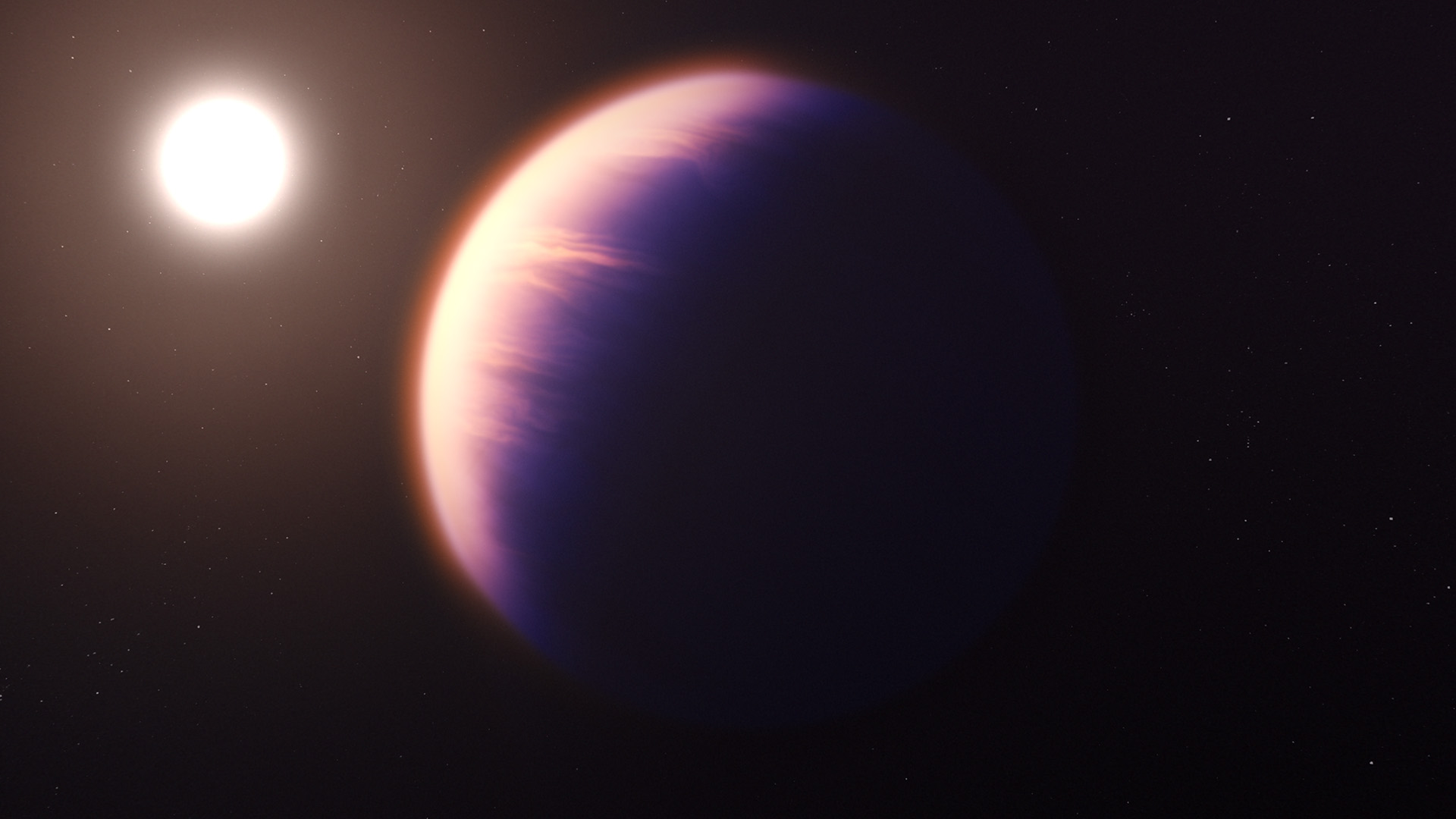
How to be an exoplanet detective
15 November 2024 @ 7:30 pm - 9:00 pm GMT
Talk by Dr Jo Barstow
We now know of over 5000 planets that exist outside the solar system, orbiting other stars. These exoplanets are much fainter than their parent stars, so in most cases we can’t directly see them and we work out that they are there only by measuring their influence on the light coming from the star. Despite these challenges, with new telescopes such as JWST we can learn about the conditions on these planets, many of which are dramatically different from solar system worlds.
In this talk, you will hear about the techniques astronomers use to discover exoplanets, and be introduced to giant planets like WASP-39b and the seven rocky worlds orbiting red dwarf star TRAPPIST-1. You will learn about how we look for the fingerprints of different chemicals in exoplanet atmospheres, and about the detective work involved in pinning down exactly what atmospheres are made of. Finally, you’ll get to make up your mind about whether finding aliens on one of these planets is really on the cards.
Jo Barstow is an Ernest Rutherford Fellow at the Open University. She is an expert in spectral modelling of exoplanet atmospheres, which is a fancy way of saying she spends most of her time getting very annoyed with computers. During her career she has studied a range of planets from Venus to Saturn to extremely hot Jupiter-sized exoplanets; one of the questions she really wants to answer is whether Earth or Venus-like planets are more common. She thinks that her 8-year old self during her Nancy Drew phase would probably be fairly happy with being an Exoplanet Detective.
Image credit: NASA, ESA, CSA, Joseph Olmsted (STScI)