

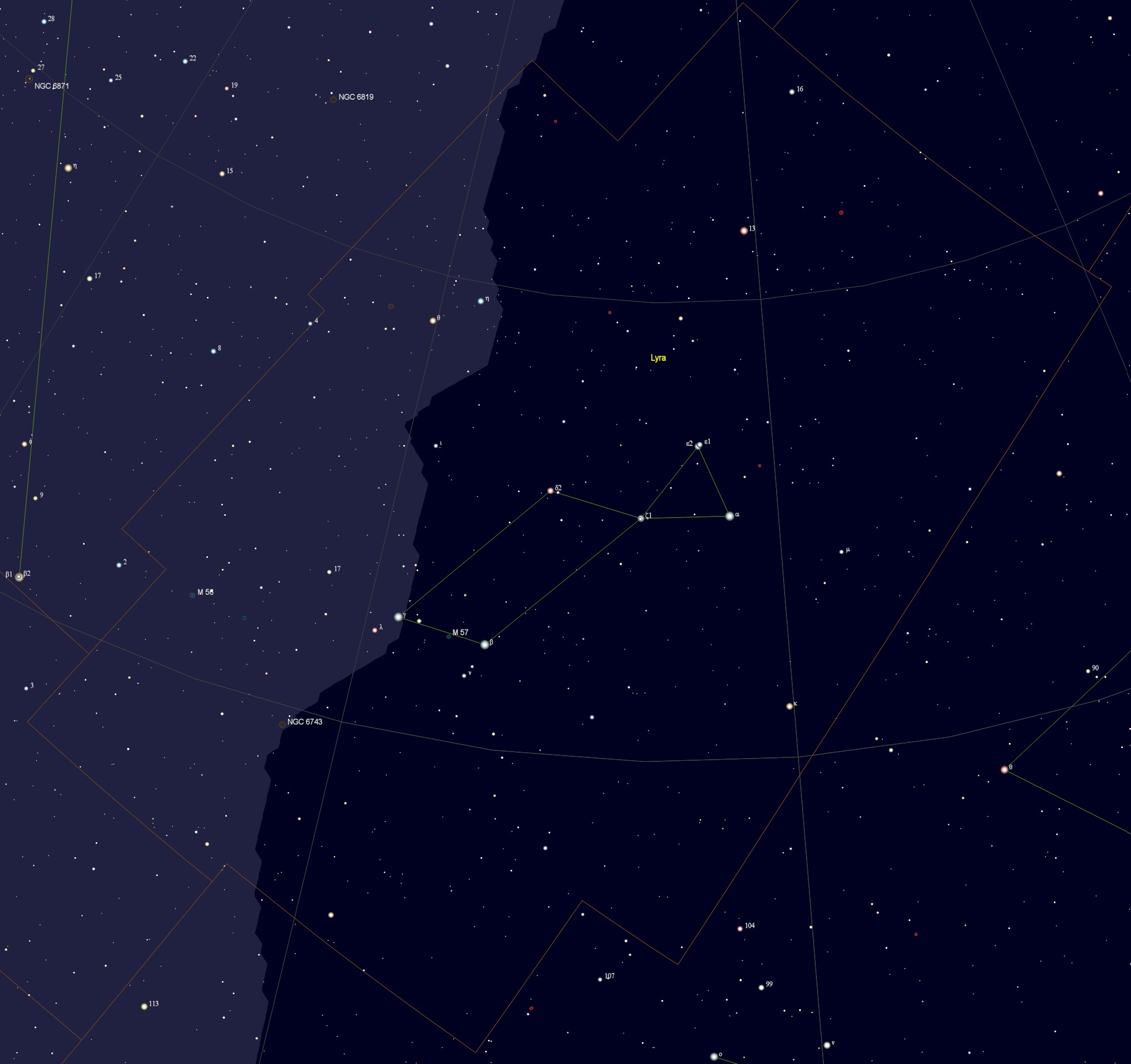
Hover over an image to find it on the chart. Click an image or chart symbol for images and information.
Abell 46
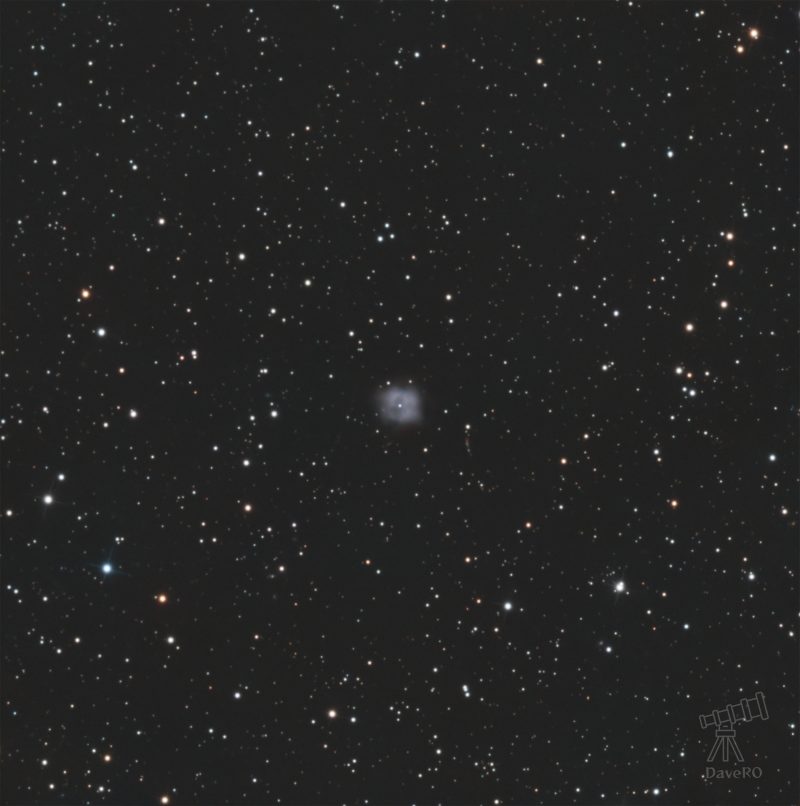
Abell 46 is a planetary nebula in the constellation Lyra. This planetary nebula was discovered in 1955 by the American astronomer George Ogden Abell on the photo plates of the Palomar Observatory Sky Survey (POSS). In 1955 he published a first list of 13 globular clusters and the positions of 73 planetary nebulae. The PN was then listed as number 34 (A55 34). In 1966 Abell published a completed list including the size and description of the 86 planetary nebulae discovered on the POSS photo plates. The PN was then listed as nebula 46 (A66 46). [331, 332]
Intro source: Deep-Sky Corner.
Delta Lyrae Cluster
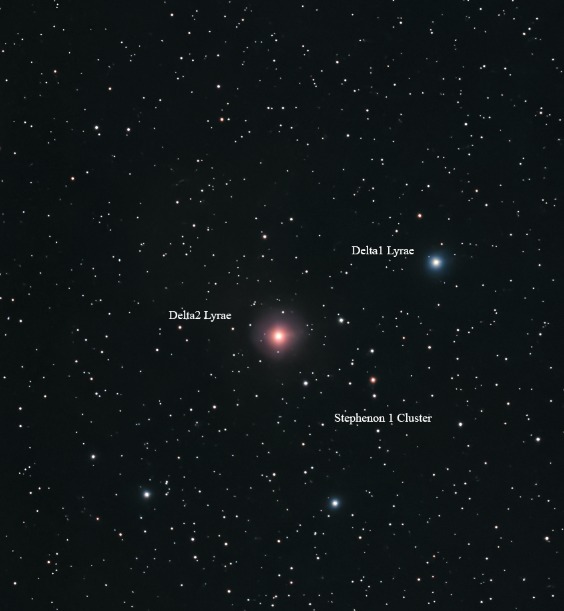
The Delta Lyrae cluster or Stephenson 1 is a sparse open cluster of stars located about 1,220 light years away in the northern constellation of Lyra. Centered on the bright star Delta2 Lyrae for which it is named but not a member like Delta1 Lyrae is with 70% certainty.
Intro source: Wikipedia.
Epsilon Lyrae
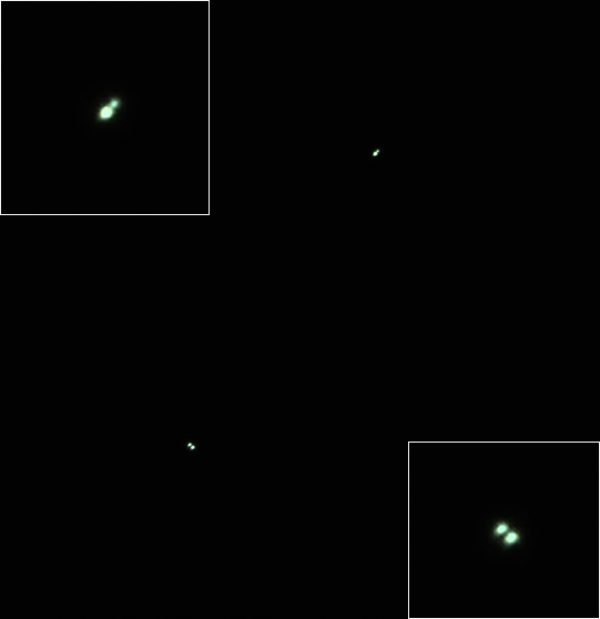
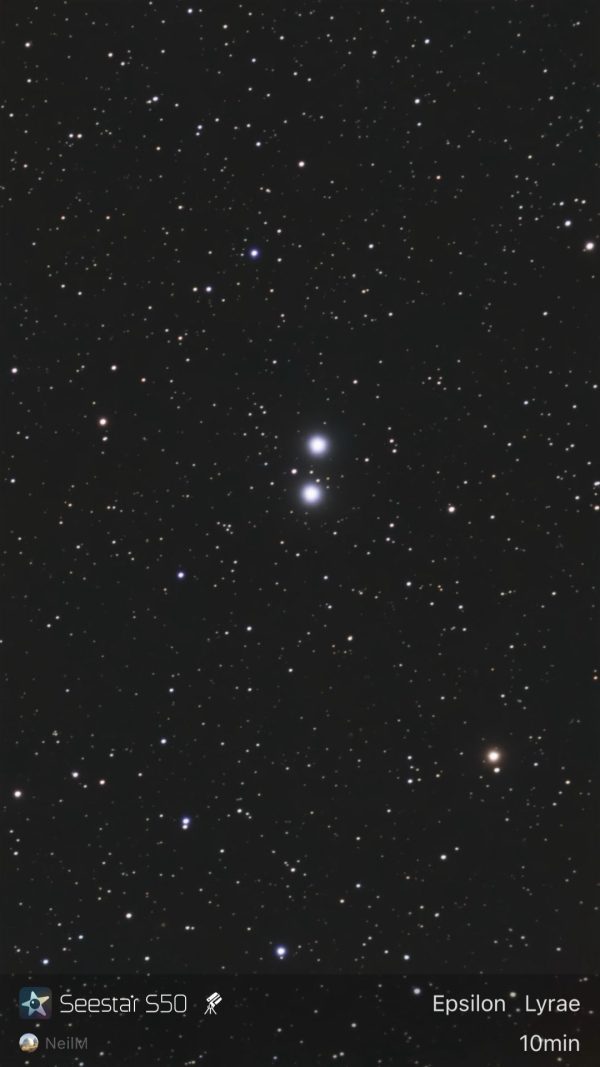
Epsilon Lyrae is a multiple star system of at least five stars approximately 160 light-years away in the constellation of Lyra. It is nicknamed the Double Double, and the primary component has the proper name Pongaponga, from a traditional name for the system.
Intro source: Wikipedia.
M 56
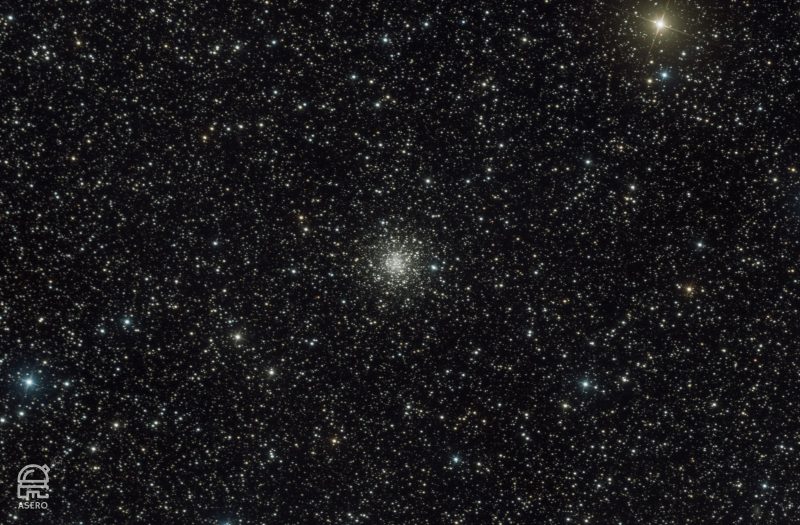
Messier 56 is a globular cluster in the constellation Lyra. It was discovered by Charles Messier in 1779. It is angularly found about midway between Albireo and Sulafat. In a good night sky it is tricky to find with large (50–80 mm) binoculars, appearing as a slightly fuzzy star. The cluster can be resolved using a telescope with an aperture of 8 in (20 cm) or larger.
Intro source: Wikipedia.
M57
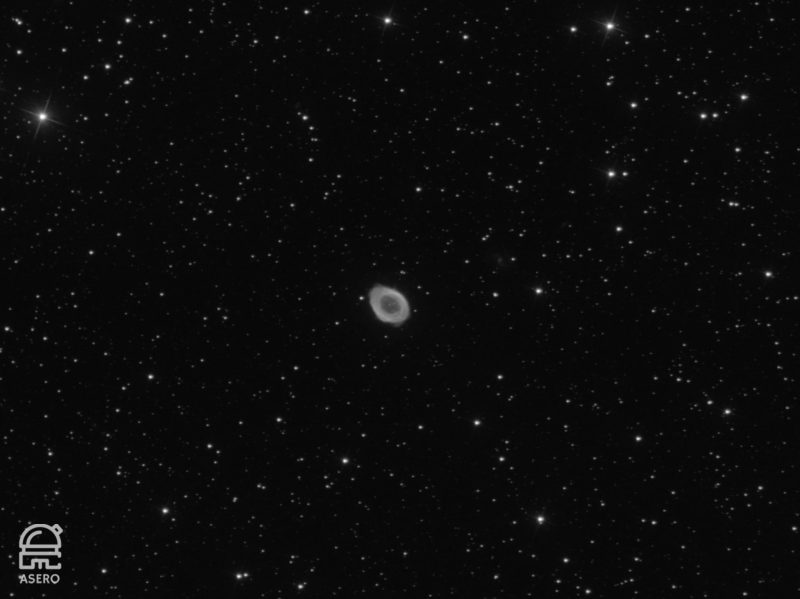
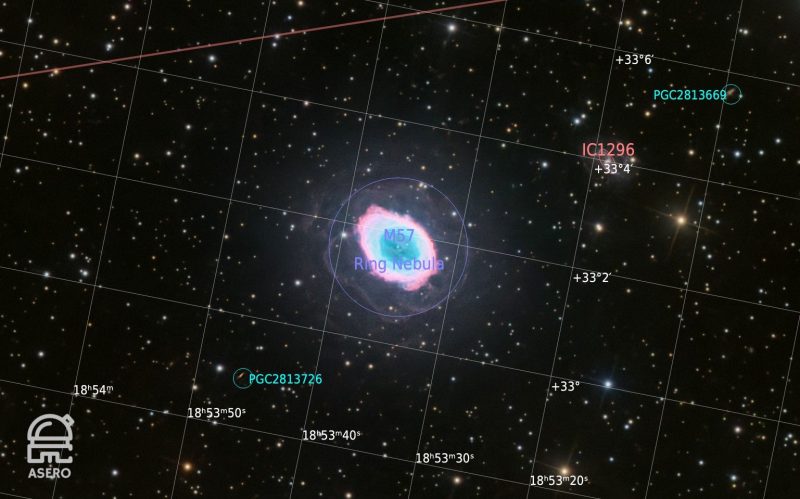
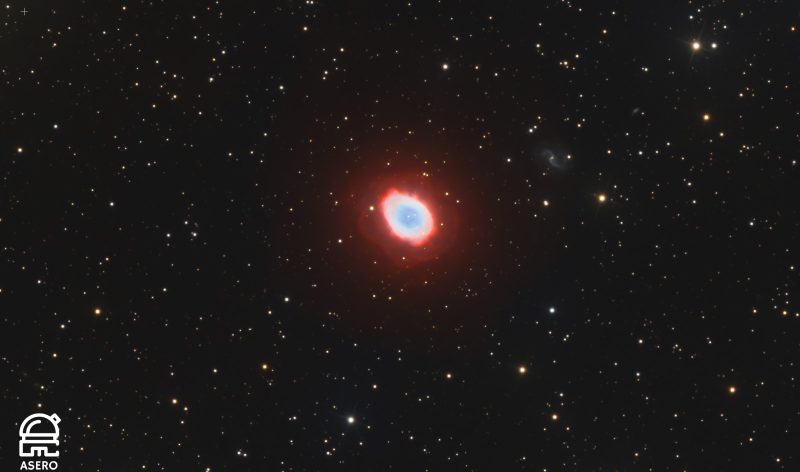
The Ring Nebula is a planetary nebula in the northern constellation of Lyra, about mid-way between the prominent stars Beta and Gamma Lyrae. It is also catalogued as Messier 57, M57 and NGC 6720. The nebula was discovered by Charles Messier in 1779. It has an apparent visual magnitude of 8.8, which is too faint to be visible with the naked eye, but it can be readily observed with a small telescope.
Intro source: Wikipedia.
NGC 6702
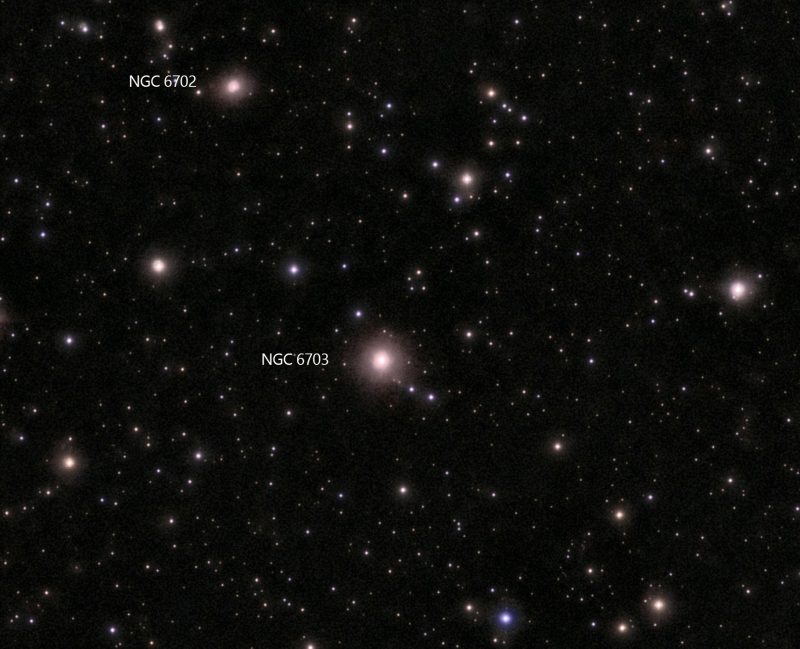
NGC 6702 is an elliptical galaxy in the constellation Lyra. It was first discovered by Heinrich d'Arrest in 1863. The galaxy's radial velocity, relative to the cosmic microwave background is measured at around 4592 ± 11 km/s, corresponding to a Hubble distance of around 67.73 ± 4.74 MPC. Many amateur astronomers believe NGC 6702 and NGC 6703 are a pair, even though they are separated by 100 million light-years.
Intro source: Wikipedia.
NGC 6743
No information
NGC 6765
No information
NGC 6791
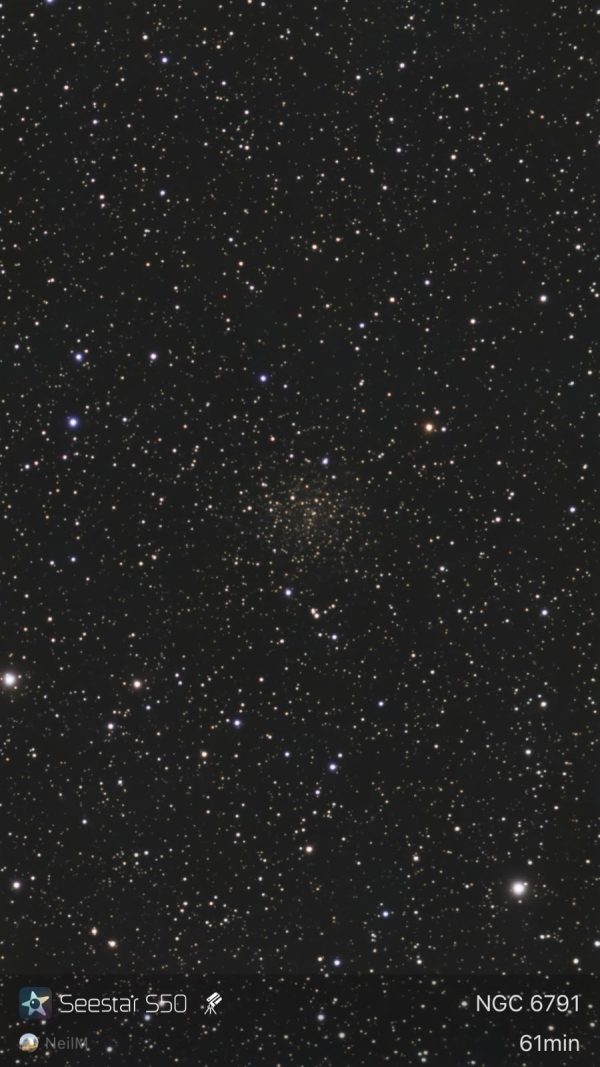
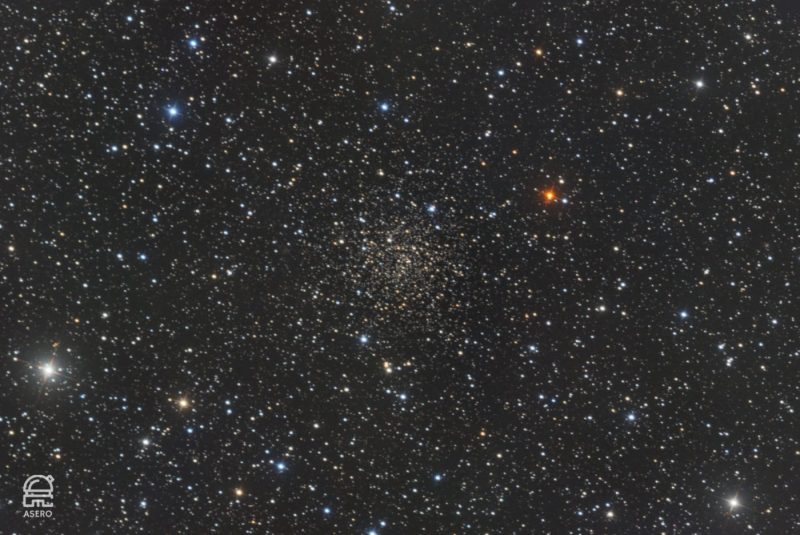
NGC 6791 is an open star cluster in the Lyra constellation. It was discovered by Friedrich August Theodor Winnecke in 1853. At roughly 8 billion years old, and with an iron to hydrogen abundance ratio that is more than twice that of the Sun, it is one of the oldest and most metal-rich clusters in the Milky Way. This is contrary to the typical rule-of-thumb where older means more metal-poor. Compounded with the fact that it has an unusually high population of stars, NGC 6791 is among the most studied clusters in the sky.
Intro source: Wikipedia.
V594 Lyr
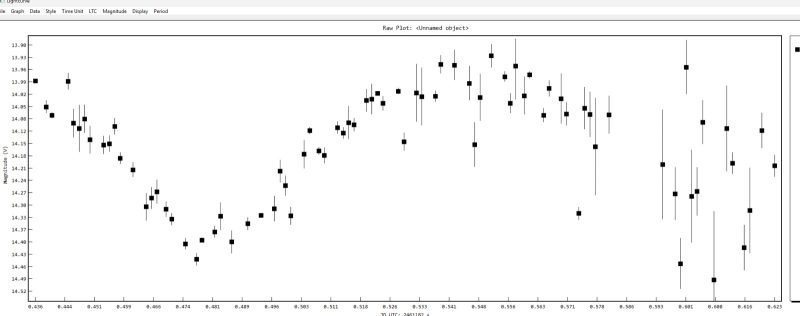
No information