

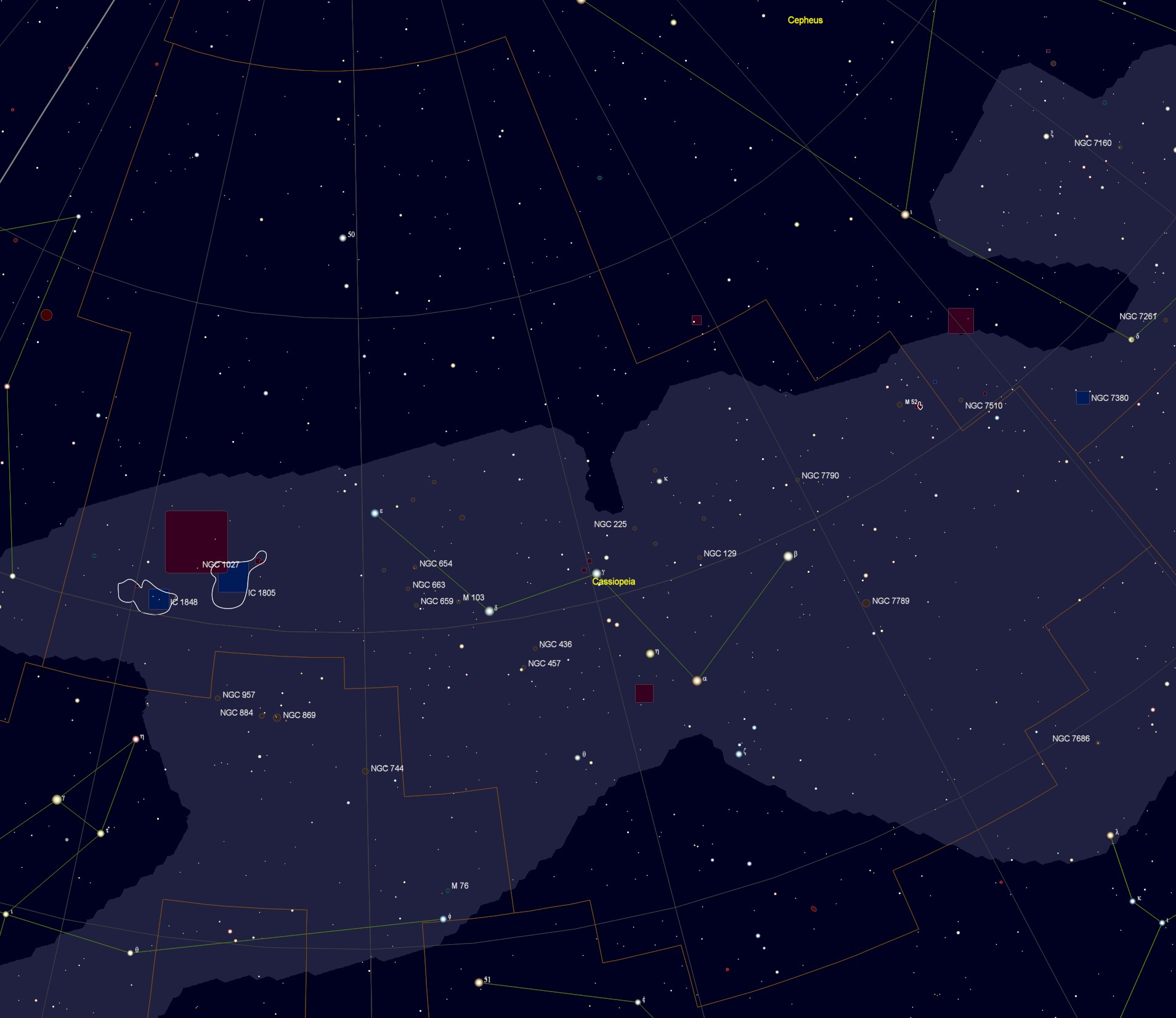
Hover over an image to find it on the chart. Click an image or chart symbol for images and information.
IC 10
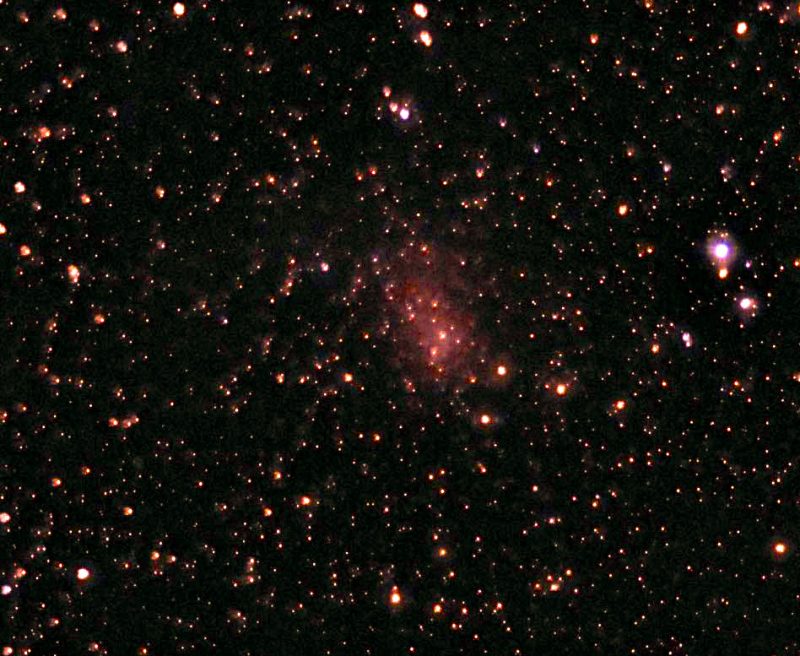
IC 10 is an irregular galaxy in the constellation Cassiopeia. It was discovered by American astronomer Lewis Swift on 8 October 1887. In 1935 Nicholas Mayall became the first to suggest that the object is extragalactic. Edwin Hubble suspected it might belong to the Local Group of galaxies, but its status remained uncertain for decades. The radial velocity of IC 10 was measured in 1962, and it was found to be approaching the Milky Way at approximately 350 km/s, strengthening the evidence for its membership in the Local Group. Its membership in the group was finally confirmed in 1996 by direct measurements of its
distance based on observations of Cepheids; most estimates place the galaxy 2–3 million light years from Earth, with some estimates ranging from 1.5–4.5 million light years. Despite its closeness, the galaxy is rather difficult to study because it lies near the plane of the Milky Way and is therefore
heavily obscured by interstellar matter.
Intro source: Wikipedia.
LDN1337
No information
M103
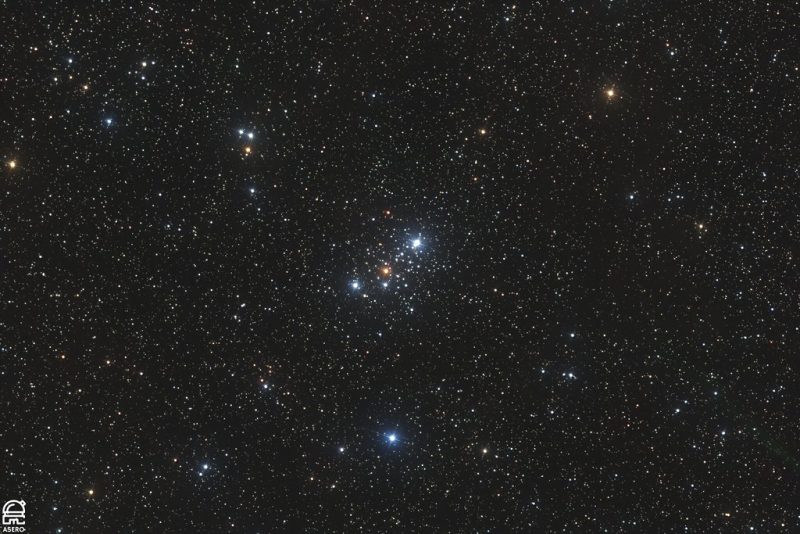
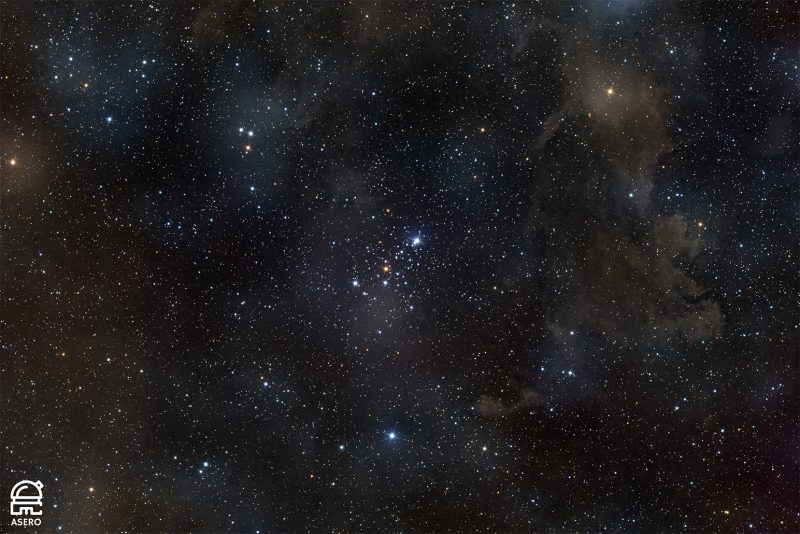
No information
M52
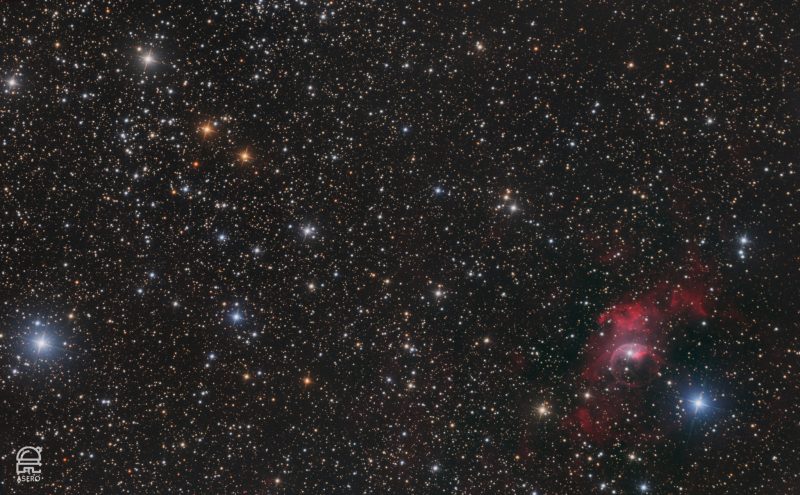
Messier 52 or M52, also known as NGC 7654 or the Scorpion Cluster, is an open cluster of stars in the highly northern constellation of Cassiopeia. It was discovered by Charles Messier in 1774. It can be seen from Earth under a good night sky with binoculars. The brightness of the cluster is influenced by extinction, which is stronger in the southern half. Its metallicity is somewhat below that of the Sun, and is estimated to be [Fe/H] = −0.05 ± 0.01.
Intro source: Wikipedia.
NGC 278
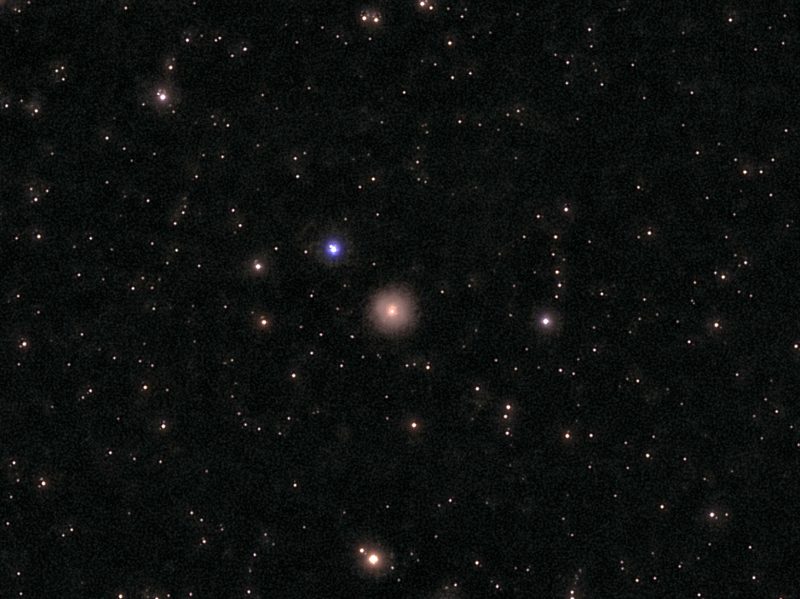
NGC 278 is an isolated spiral galaxy in the northern circumpolar constellation of Cassiopeia, near the southern constellation boundary with Andromeda. It lies at a distance of approximately 39 megalight-years from the Milky Way, giving it a physical scale of 190 ly (58 pc) per arcsecond. The galaxy was discovered on December 11, 1786 by German-born astronomer William Herschel. J. L. E. Dreyer described it as, "considerably bright, pretty large, round, 2 stars of 10th magnitude near".
Intro source: Wikipedia.
NGC 281
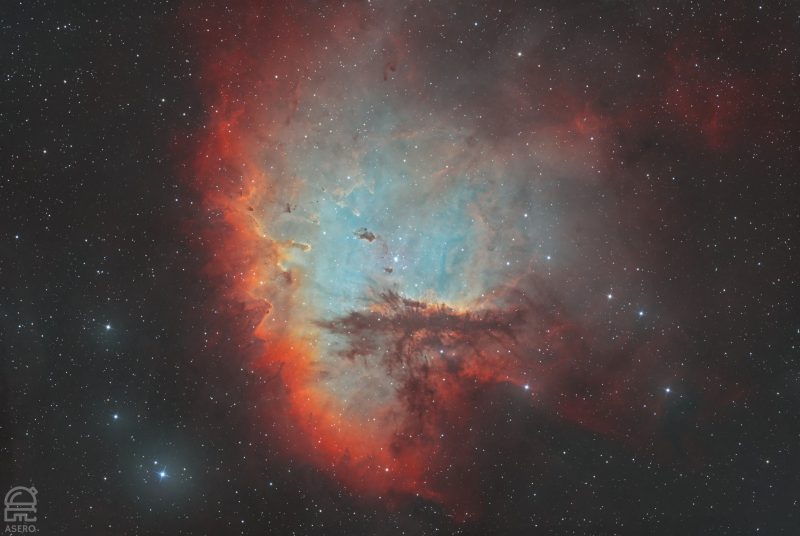
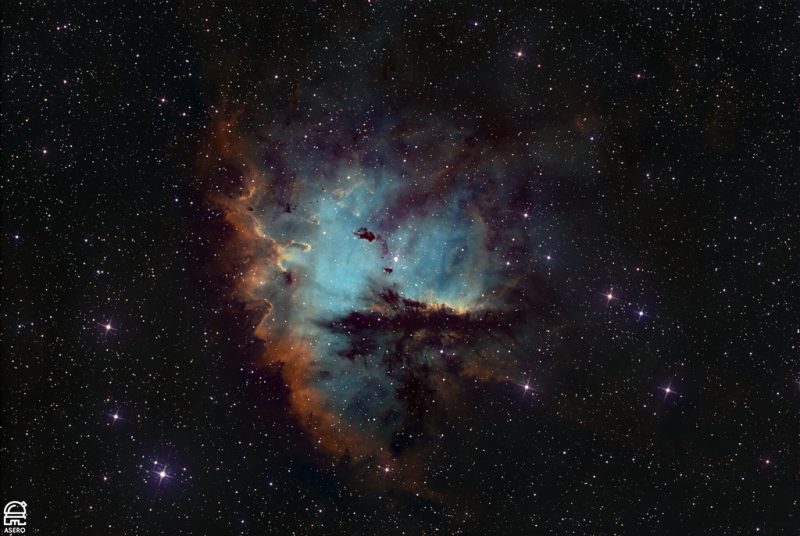
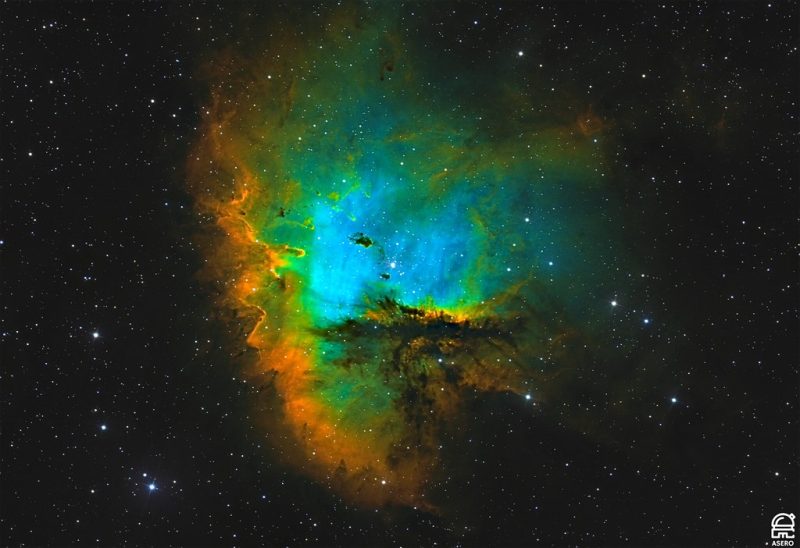
NGC 281, IC 11 or Sh2-184 is a bright emission nebula and part of an H II region in the northern constellation of Cassiopeia and is part of the Milky Way's Perseus Spiral Arm. This 20×30 arcmin sized nebulosity is also associated with open cluster IC 1590, several Bok globules and the multiple star, B 1. It collectively forms Sh2-184, spanning over a larger area of 40 arcmin. A recent distance from radio parallaxes of water masers at 22 GHz made during 2014 is estimated it lies 2.82±0.20 kpc from us. Colloquially, NGC 281 is also known as the Pacman Nebula for its resemblance to the video game character.
Intro source: Wikipedia.
NGC 7635
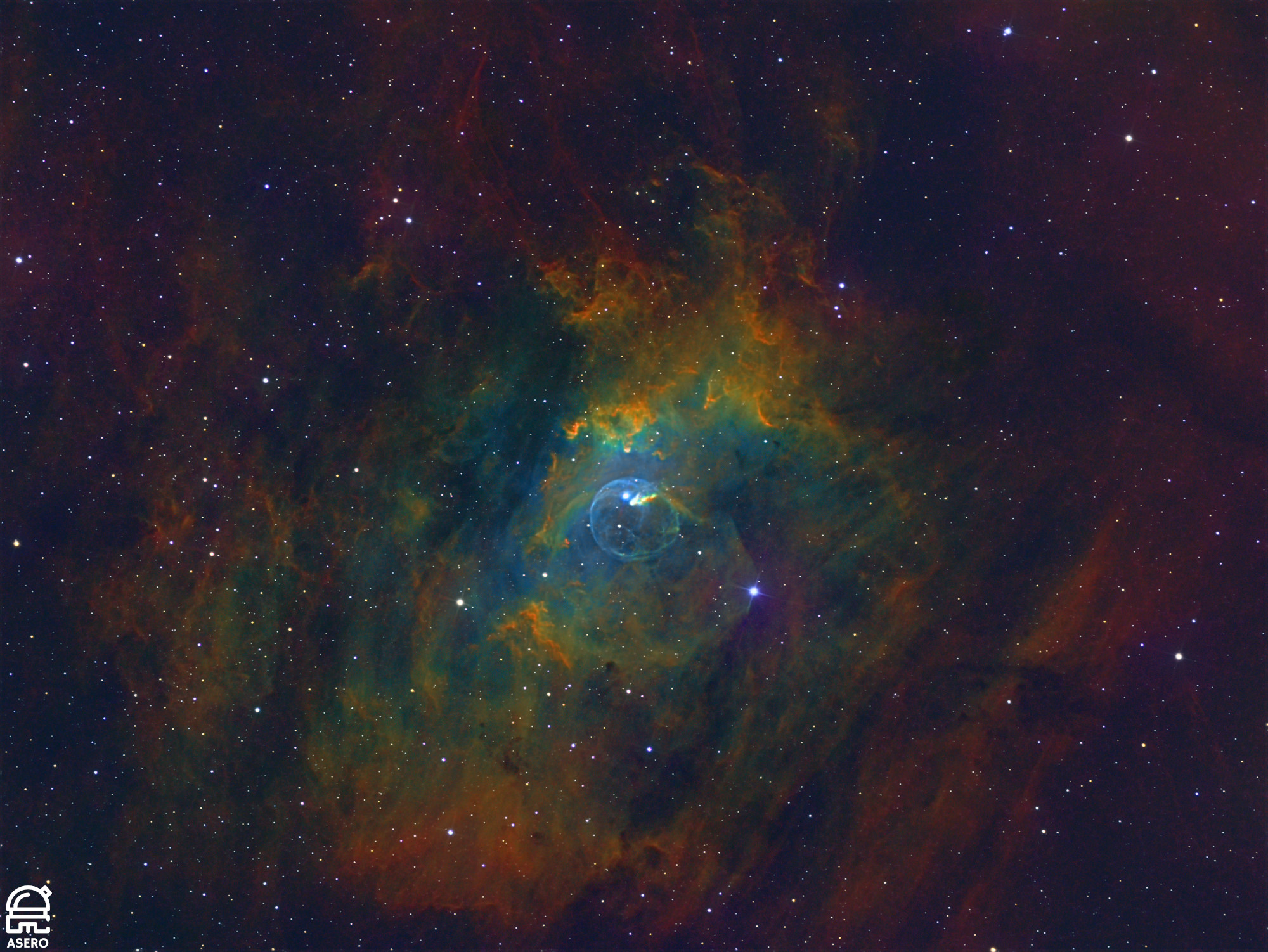
The Bubble Nebula, also known as NGC 7635, Sharpless 162, or Caldwell 11, is an H II region emission nebula in the constellation Cassiopeia. It lies close to the open cluster Messier 52. The "bubble" is created by the stellar wind from a massive hot, 8.7 magnitude young central star, SAO 20575 (BD+60°2522). The nebula is near a giant molecular cloud which contains the expansion of the bubble nebula while itself being excited by the hot central star, causing it to glow. It was discovered in November 1787 by William Herschel. The star BD+60°2522 is thought to have a mass of about 44 M☉.
Intro source: Wikipedia.
NGC 7789
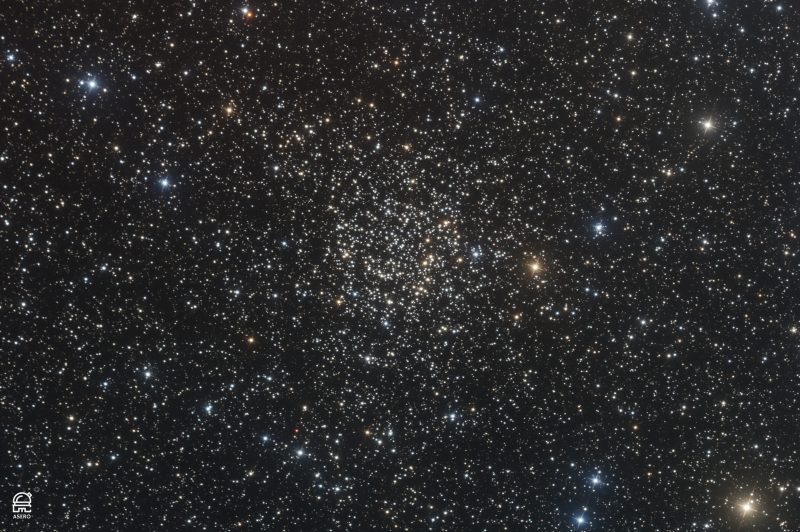
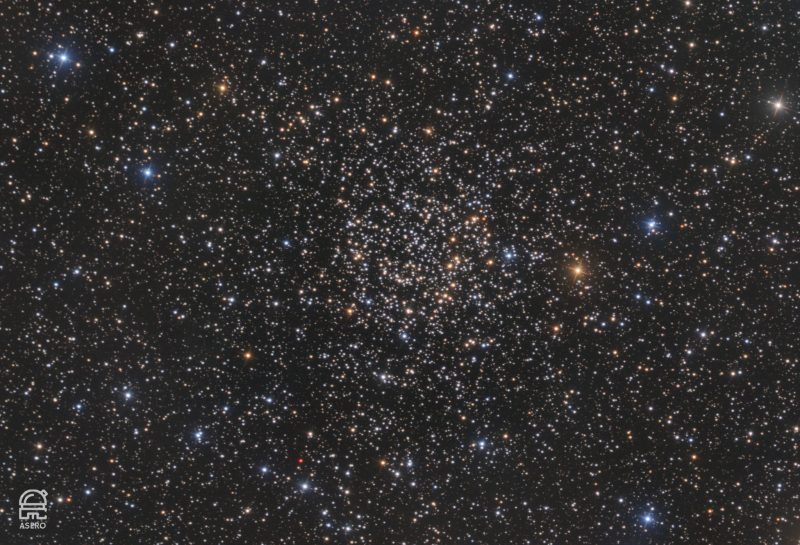
NGC 7789 is an open cluster located around 7,600 light years from Earth in the constellation of Cassiopeia. It is intermediate-age cluster with estimates ranging from 1.4 to 1.7 billion years old. It has a mass of around 6,620.4±762.5 solar masses.
Intro source: Wikipedia.
NGC457
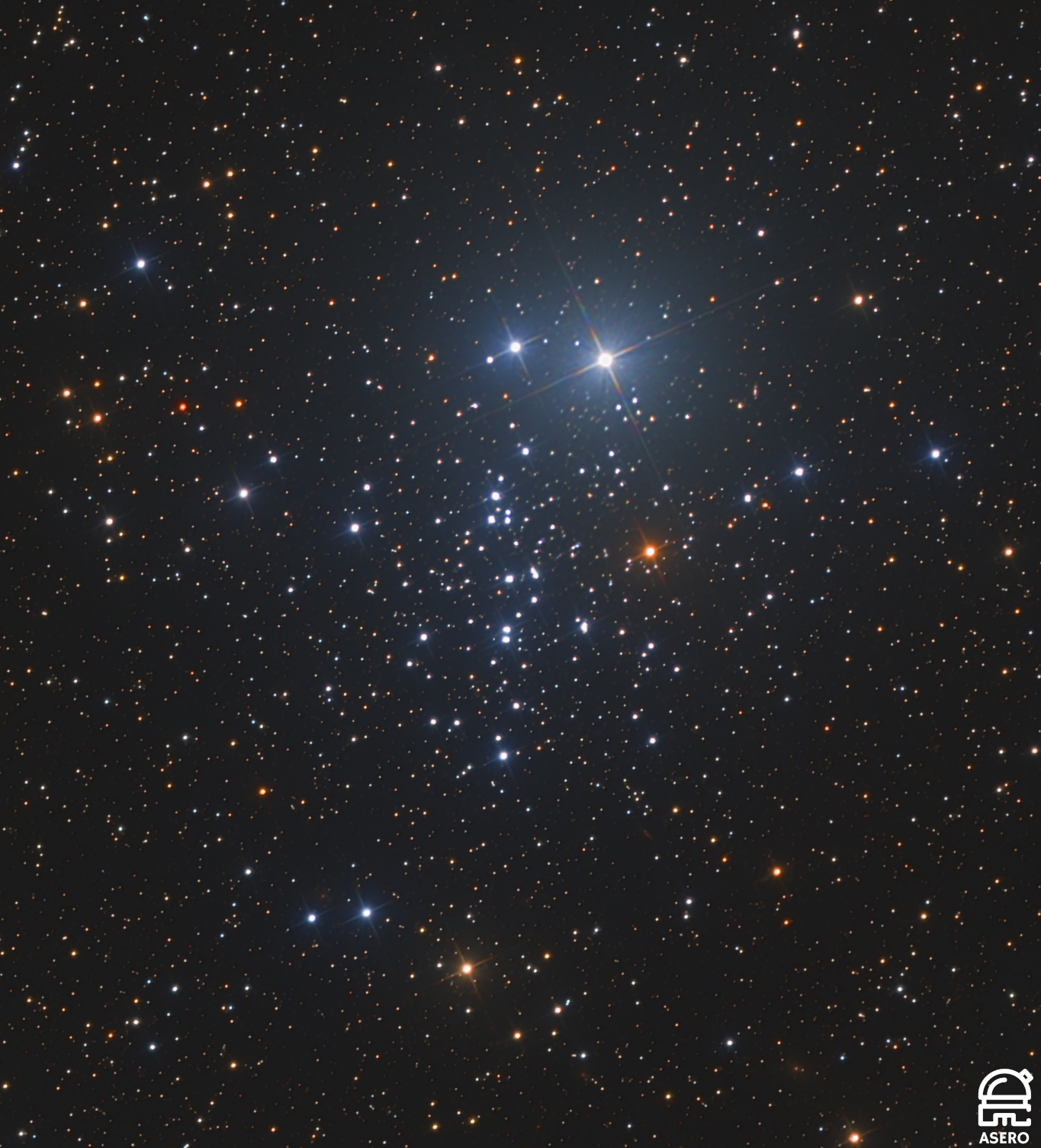
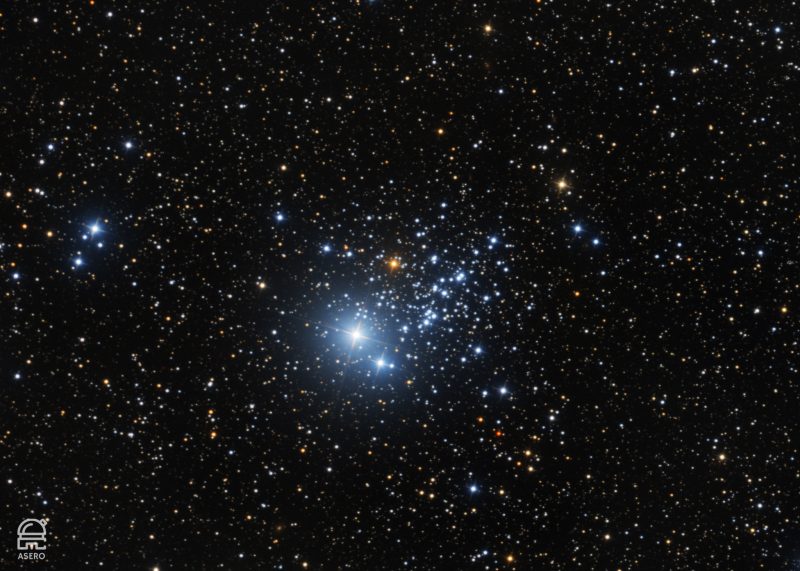
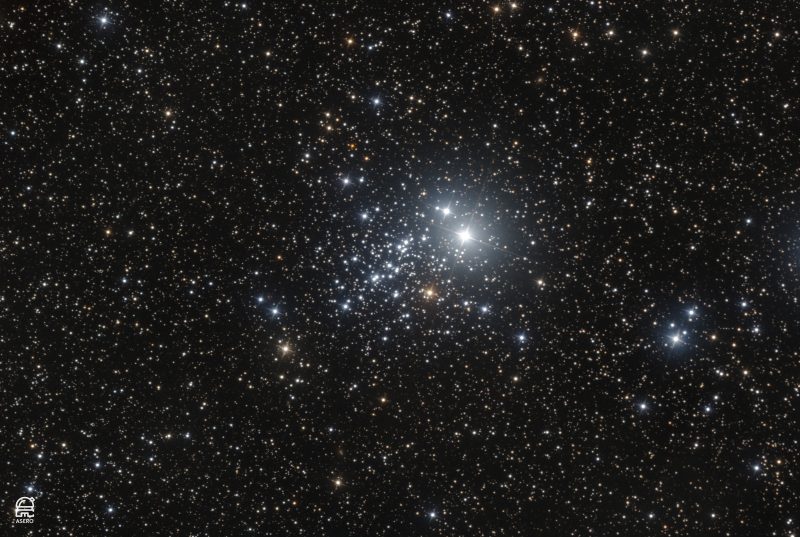
NGC 457 is an open cluster of stars in the northern constellation of Cassiopeia. Alternatively, it is designated Caldwell 13, and known as the Dragonfly Cluster, E.T. Cluster, Owl Cluster, Kachina Doll Cluster or Phi Cassiopeiae Cluster. It was discovered by German-British astronomer William Herschel on August 18, 1780, with a 6.2 inch reflector telescope, and catalogued as VII 42. This is an easy target for amateur astronomers, and can be seen even with small telescopes in light-polluted skies.
Intro source: Wikipedia.
Sh2-157
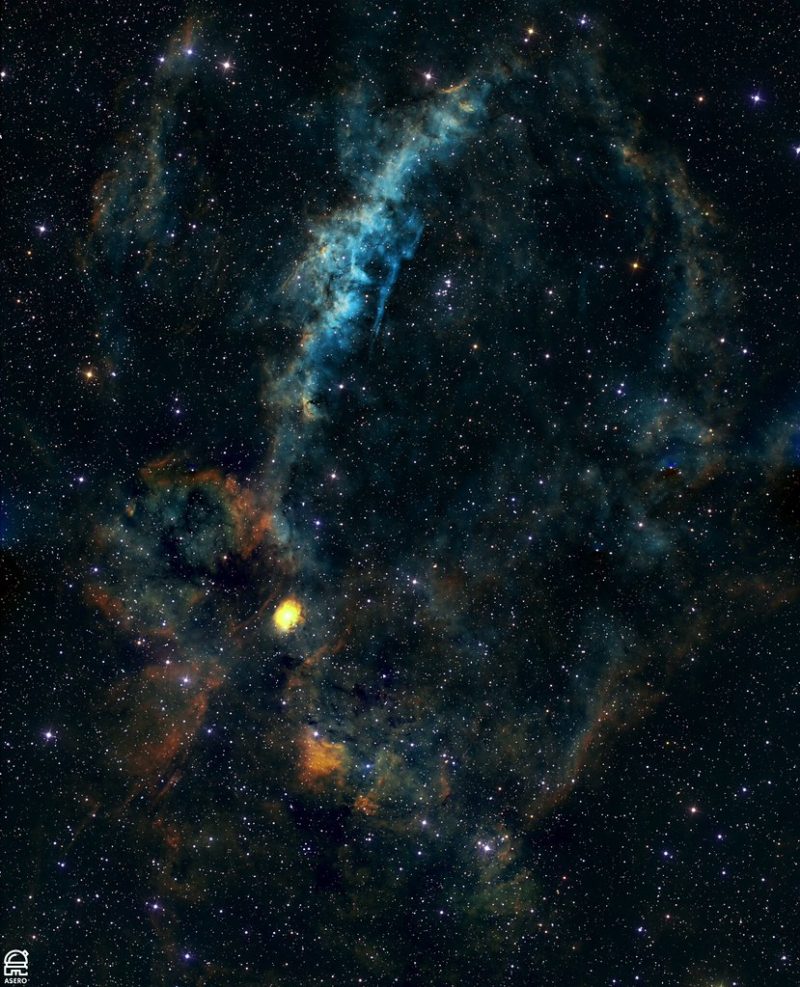
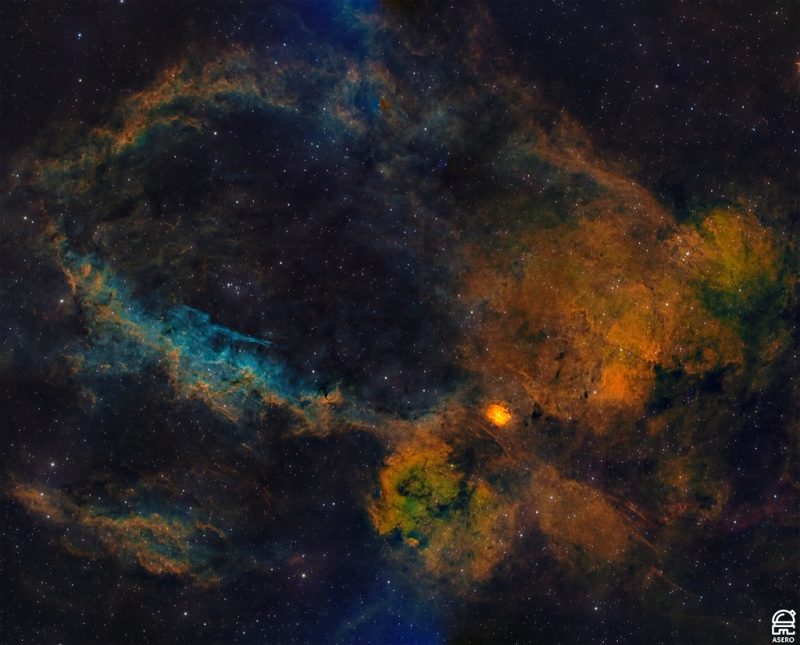
Sh2-157 is an H II region listed in Stewart Sharpless’s 1959 catalogue of Galactic emission nebulae. Sharpless gives it a maximum angular diameter of about 90 arcminutes. In the original catalogue it is classified as irregular and strongly filamentary. It is among the brighter class on Sharpless’s three-point brightness scale. The catalogue records 5 associated stars.
Intro source: Sharpless Catalogue (VizieR VII/20).
Sh2-173
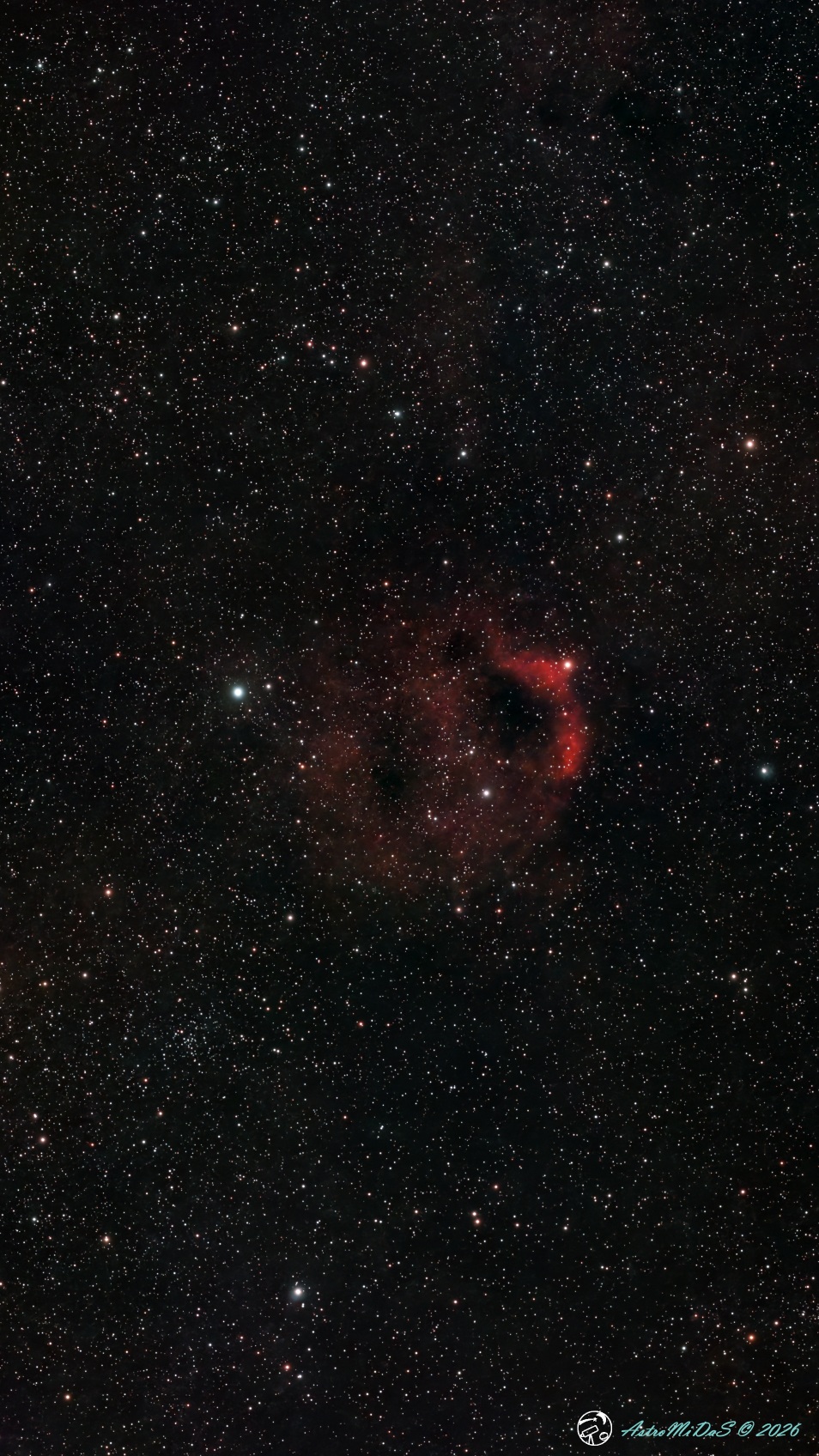
Sh2-173 is an H II region listed in Stewart Sharpless’s 1959 catalogue of Galactic emission nebulae. Sharpless gives it a maximum angular diameter of about 30 arcminutes. In the original catalogue it is classified as circular and intermediate in structure. It is of intermediate catalogue brightness on Sharpless’s three-point brightness scale. The catalogue records 2 associated stars.
Intro source: Sharpless Catalogue (VizieR VII/20).
StDr 141
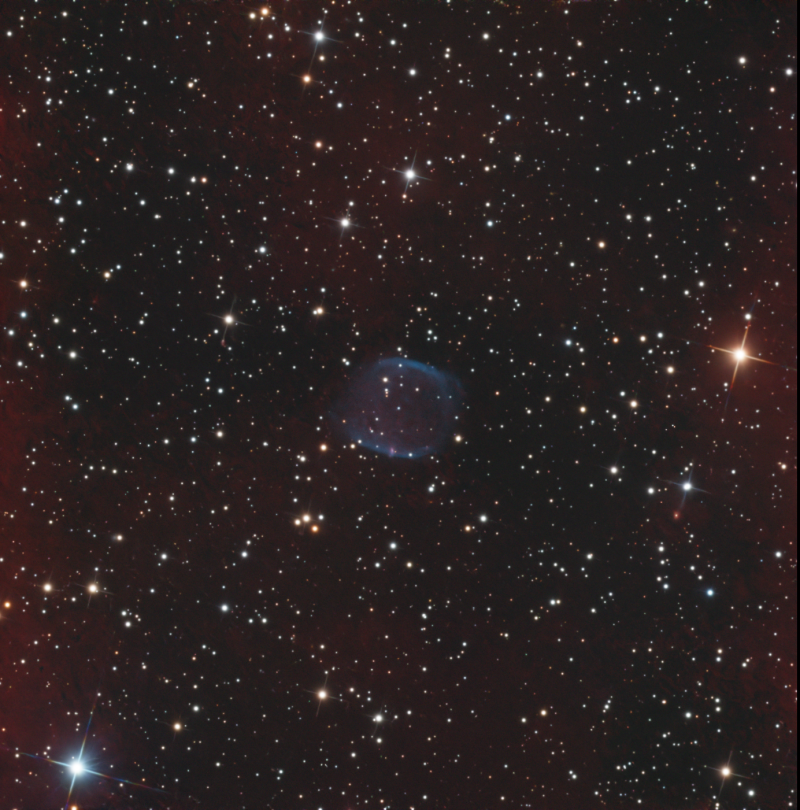
StDr 141 is a confirmed planetary nebula in the Strottner-Drechsler catalogue. It is also designated PN G115.9-13.5. PNnet gives its apparent dimensions as about 4.2 x 2.7 arcminutes.
Intro source: PlanetaryNebulae.net (StDr catalogue).