

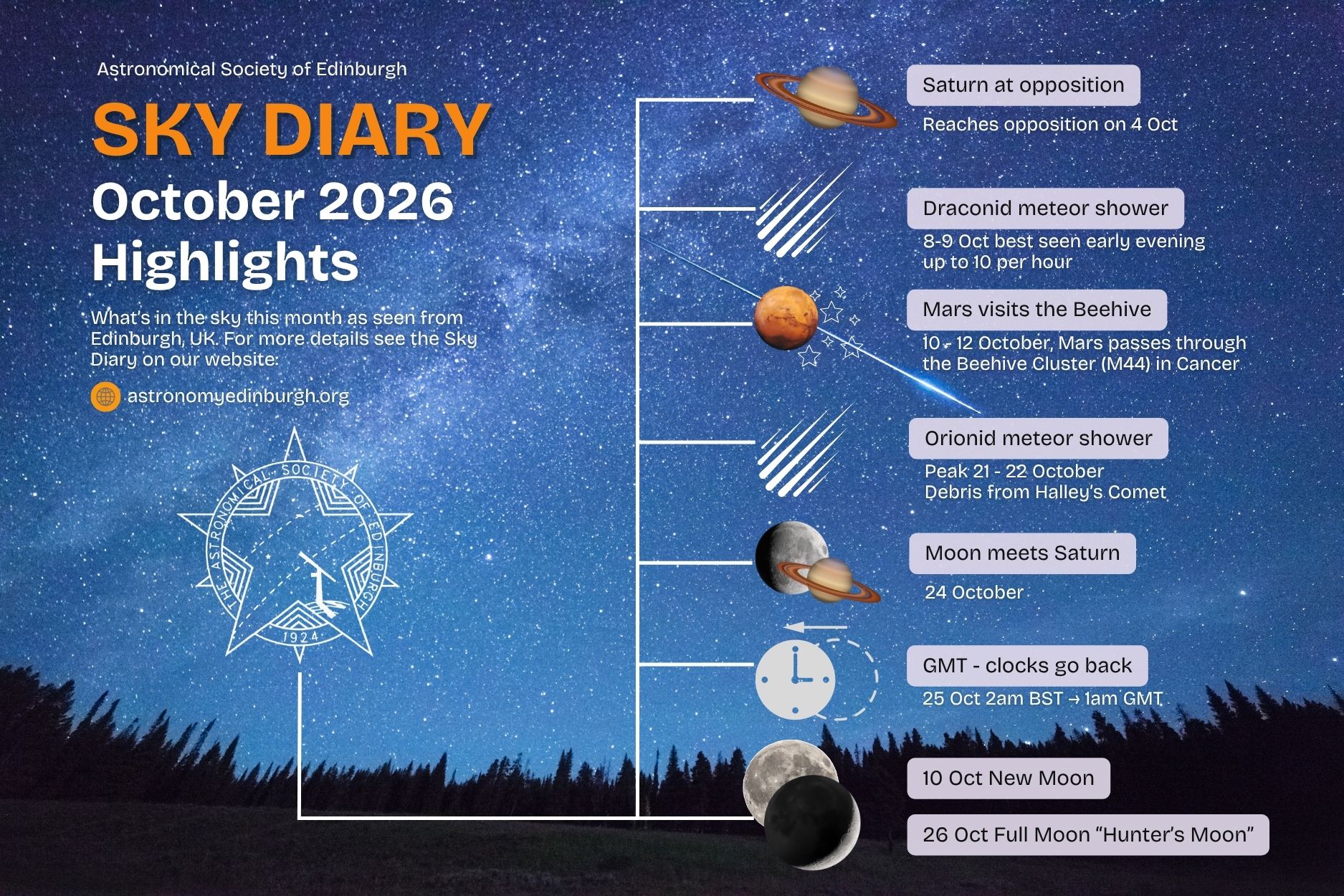
Saturn at its best, shooting stars, Mars visits the Beehive Cluster, find the Andromeda Galaxy
by Mark Phillips
Using data from Dominic Ford’s in-the-sky.org and other sources
October is one of my favourite months for astronomy. The nights are getting properly dark again, Saturn is at its best, and there’s plenty to see whether you’re using binoculars, a telescope or simply looking up.
Saturn at opposition – 4 October
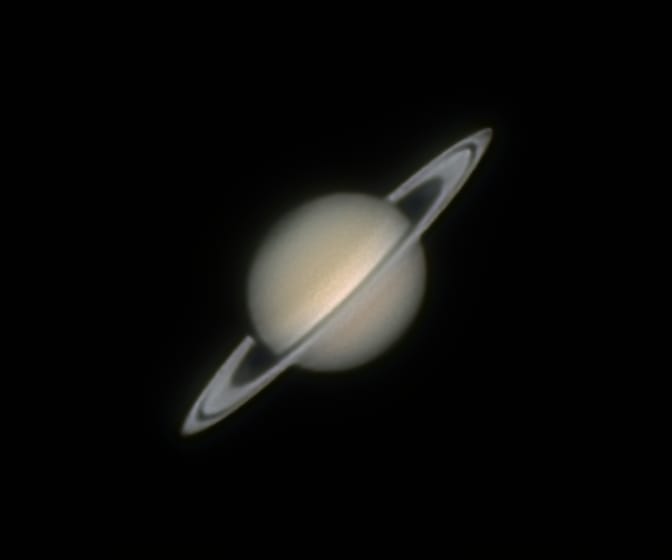
Saturn 2026-09-18, David Brett, DaveRO Spain
Saturn reaches opposition on 4 October. This is when Earth lies between Saturn and the Sun, making the ringed planet brighter than at any other time this year and visible for most of the night.
Even a small telescope will show its beautiful rings, while larger instruments reveal cloud belts and some of its brighter moons. If you’ve never seen Saturn through a telescope before, now is the perfect time. The rings are now opening up again, making them easier to see than they were last year.
Draconid meteor shower – 9 October
The Draconids peak on the evening of 9 October. Unlike most meteor showers, they’re best seen soon after darkness falls, so you don’t need to stay up until the early hours.
 The shower usually produces up to about ten meteors an hour under dark skies, although every so often it surprises us with a much stronger display.
Mars visits the Beehive
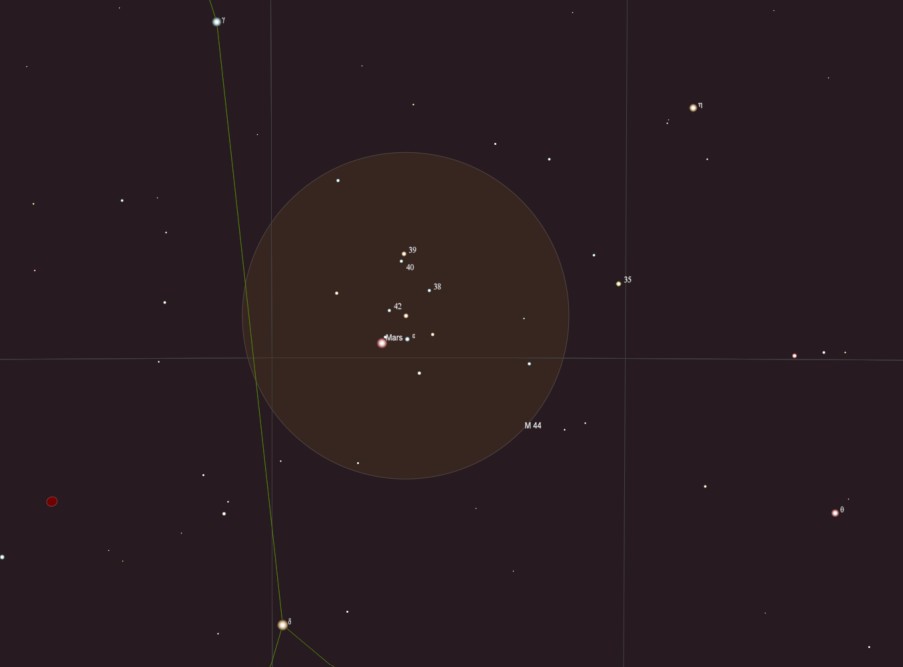
Between 10 and 12 October, Mars passes through the Beehive Cluster (M44) in Cancer.
A pair of binoculars will show the orange planet passing through the Beehive Cluster in one of the nicest binocular sights of the month.
Orionid meteors
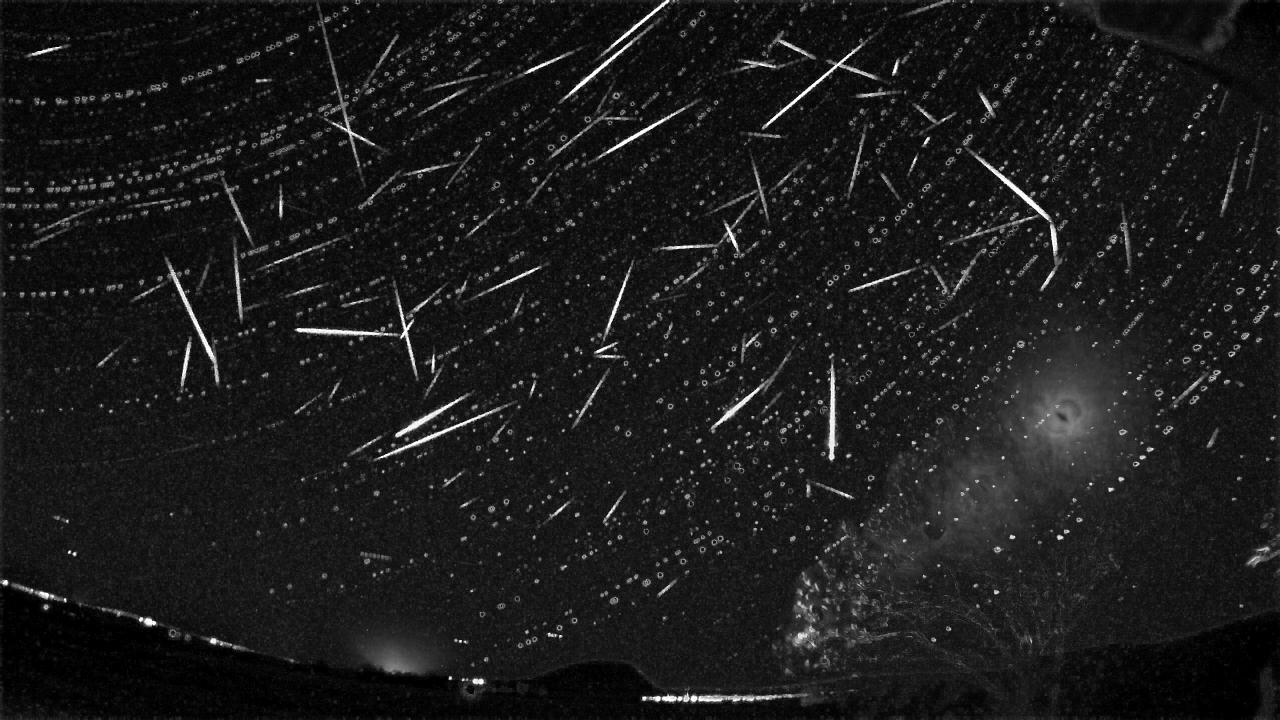
Stack of Orionid meteors from 2024, Ian A Smith
The Orionid meteor shower reaches its peak on the nights of 21–22 October.
These fast-moving meteors are tiny pieces of Halley’s Comet burning up in Earth’s atmosphere. Under dark skies you can expect to see around 10 to 20 meteors an hour, although a bright Moon will reduce the number visible this year. The Orionids are famous for their fast meteors, many of which leave glowing trails across the sky.
Moon and Saturn – 24 October
Look towards the south-east on the evening of 24 October to see the waxing Moon close to Saturn. It’s a lovely naked-eye sight, and both will fit comfortably in the same binocular field.
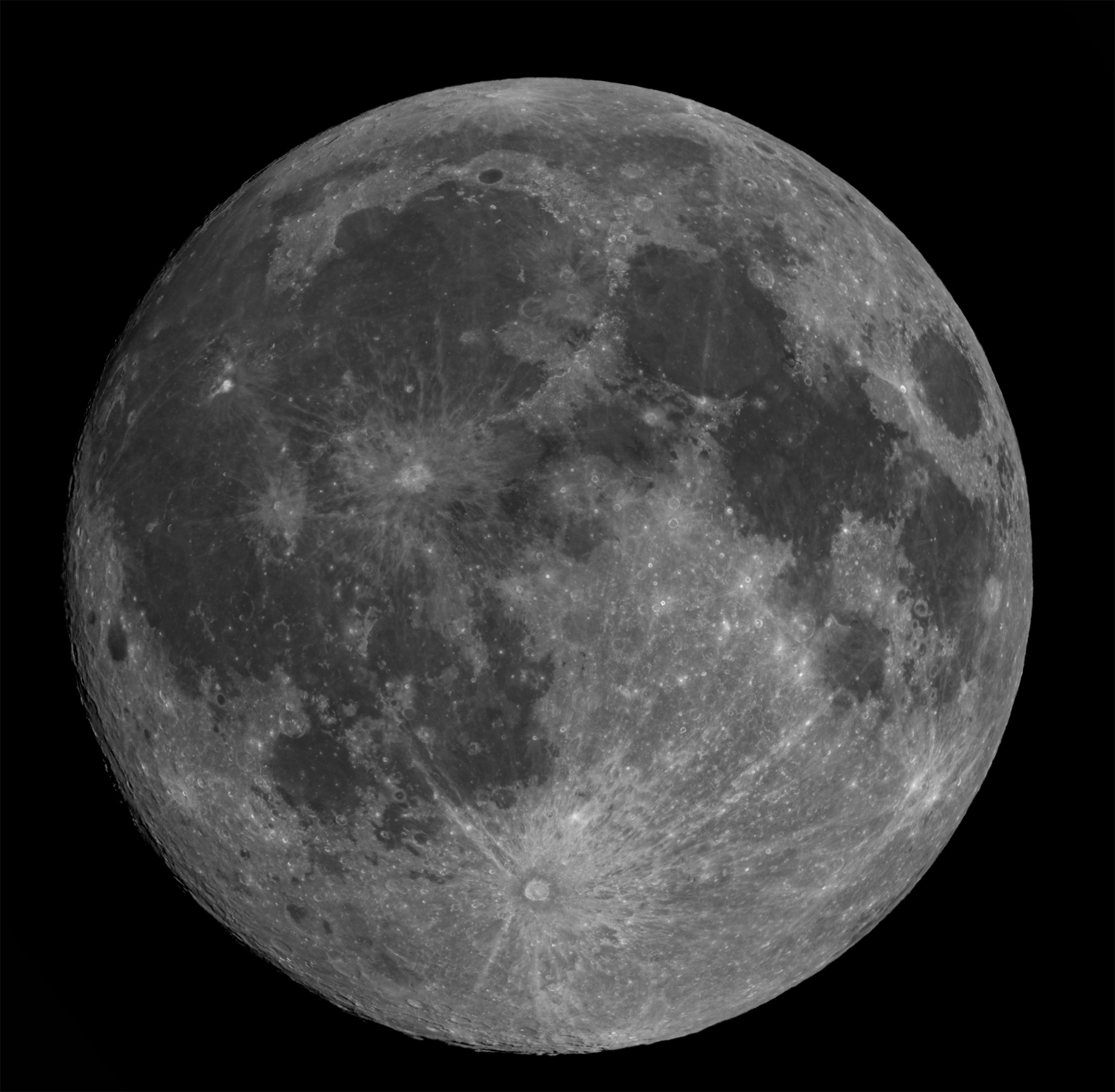
Full Moon 2026-09-26 M. Phillips
Hunter’s Moon – 26 October
October’s Full Moon is traditionally known as the Hunter’s Moon. It rises shortly after sunset and makes a beautiful photographic subject as it climbs into the autumn sky.
Clocks go back
Don’t forget that British Summer Time ends on Sunday 25 October. At 2:00 am, the clocks go back one hour to 1:00 am GMT. The good news for astronomers is that it gets dark much earlier by the clock, making weeknight observing much easier.
This month’s challenge
Can you find the Andromeda Galaxy?
It’s the most distant object that many people will ever see with their own eyes, around 2½ million light years away.
Under a dark sky it’s just a faint misty patch, but binoculars transform it into a beautiful glowing galaxy. Once you’ve found it, you’ll wonder why it took so long!
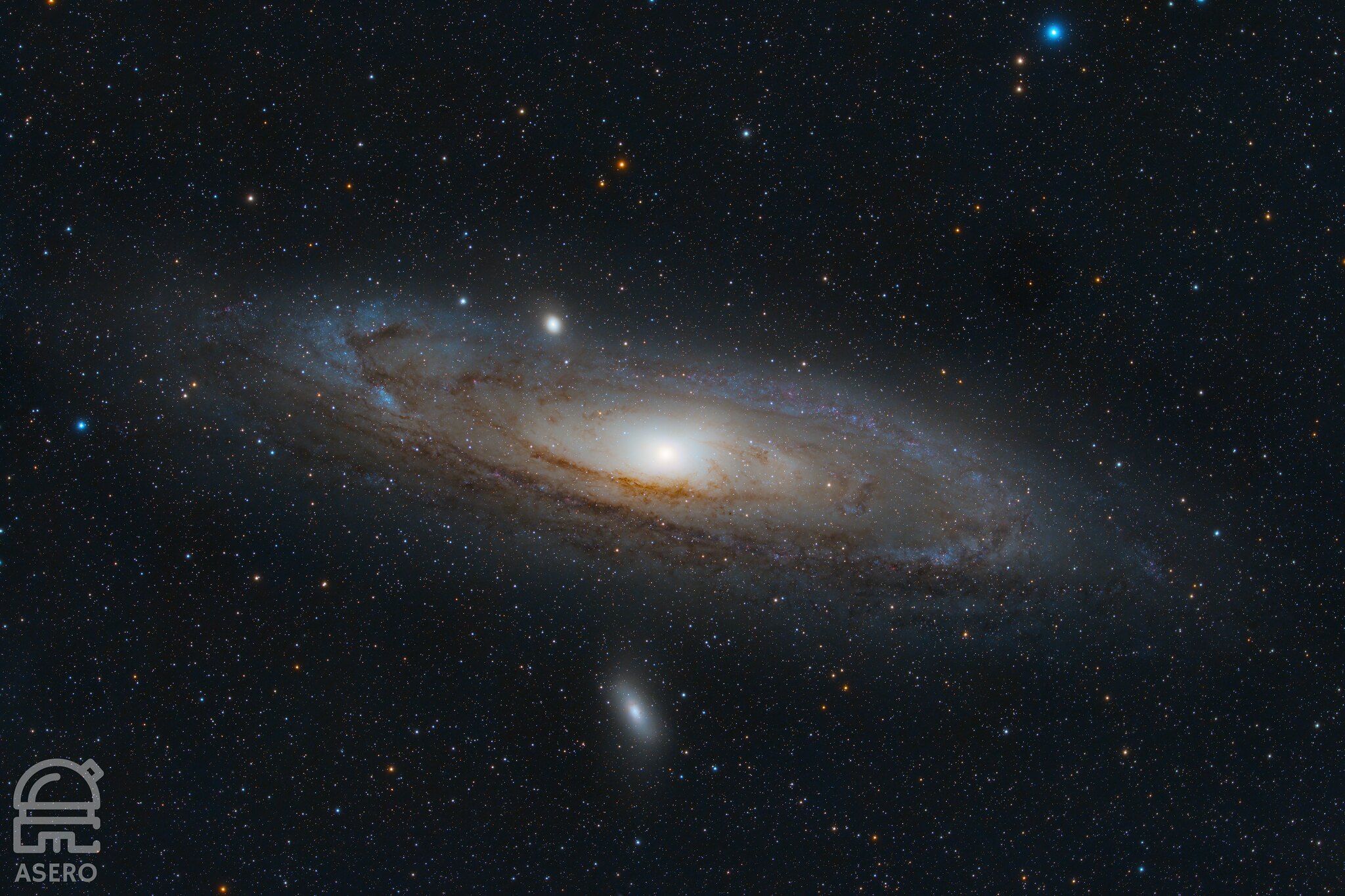
M31 imaged from Spain using ASERO, processed by Eros Tang
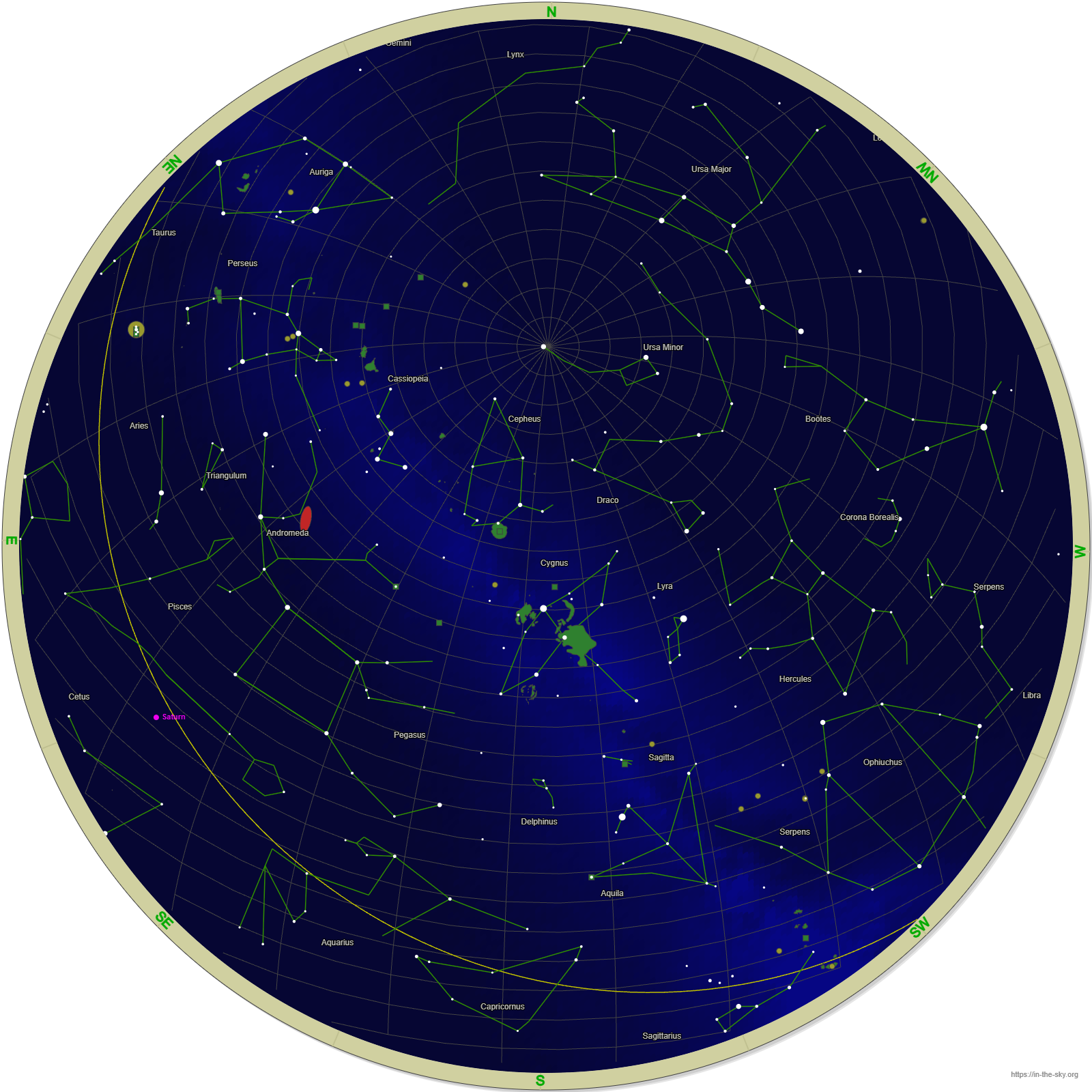
The evening sky at 20:15 BST on 15 October 2026
Click on an item to expand for more information:

| Comet name | Mag | Constellation | Separation from Sun | Trend | Absolute magnitude last updated |
| 10P/Tempel | 9.0 | Piscis Austrinus | 136° | Fading | 1 Apr 2018 |
| 161P/Hartley-IRAS | 9.8 | Aquarius | 164° | Brightening | 3 Sep 2026 |
| C/2026 M3 (MASTER) | 10.3 | Ophiuchus | 74° | Brightening | Unknown |
| 107P/Wilson-Harrington | 10.4 | Ophiuchus | 65° | Brightening | Unknown |
| 78P/Gehrels | 11.9 | Gemini | 77° | Fading | 30 Sep 2020 |
| 69P/Taylor | 12.5 | Monoceros | 84° | Brightening | Unknown |
| D/1884 O1 (Barnard) | 13.0 | Scorpius | 67° | Brightening | Unknown |
| 88P/Howell | 13.1 | Aries | 137° | Fading | 1 Apr 2018 |
| P/1999 D1 (Hermann) | 13.3 | Leo | 18° | Brightening | Unknown |
| C/2024 T5 (ATLAS) | 13.3 | Lepus | 98° | Brightening | 3 Sep 2026 |
| C/2025 D1 (Groeller) | 13.3 | Draco | 72° | Brightening | Unknown |
| 2P/Encke | 13.7 | Pisces | 161° | Brightening | 14 Mar 2017 |
| 168P/Hergenrother | 13.8 | Lynx | 68° | Fading | 15 Jan 2013 |
| 63P/Wild | 13.9 | Corvus | 12° | Fading | 1 Aug 2013 |
| 84P/Giclas | 14.2 | Capricornus | 114° | Brightening | 8 Feb 2017 |
| C/2024 J3 (ATLAS) | 14.3 | Lyra | 92° | Fading | 1 Jul 2026 |
| P/2010 H2 (Vales) | 14.6 | Sagittarius | 86° | Fading | Unknown |
| 220P/McNaught | 14.7 | Taurus | 132° | Fading | Unknown |
| 123P/West-Hartley | 14.7 | Leo | 24° | Brightening | 3 Jun 2019 |
| 260P/McNaught | 15.0 | Auriga | 99° | Fading | 3 Sep 2026 |
| P/2019 Y2 (Fuls) | 15.0 | Virgo | 7° | Fading | Unknown |
| 65P/Gunn | 15.1 | Cetus | 168° | Fading | 1 Aug 2017 |
| 11P/Tempel-Swift-LINEAR | 15.3 | Andromeda | 137° | Brightening | 5 Jan 2021 |
| C/2023 R1 (PANSTARRS) | 15.3 | Libra | 47° | Fading | 1 Jul 2026 |
| C/2025 R3 (PANSTARRS) | 15.5 | Puppis | 73° | Fading | 1 Jul 2026 |
The Draconid meteor shower will be active from 6 October to 10 October, producing its peak rate of meteors around 9 October.
The shower will peak close to new moon, and so moonlight will present minimal interference.
The Orionid meteor shower will be active from 2 October to 7 November, producing its peak rate of meteors around 21 October.
The shower is expected to reach peak activity at around 19:00 BST on 21 October 2026, and so the best displays might be seen after the radiant rises on 21 October.
The Moon, in Aquarius, will be only 3 days away from full phase at the shower’s peak, presenting significant interference throughout the night.
The parent body responsible for creating the Orionid shower has been identified as comet 1P/Halley.
| Date | Age of Moon | Sun | Moon | ||||||||
| Rise | Culm | Set | Constellation | Rise | Culm | Set | Constellation | ||||
| 2026 | Sep | 30 | 19 days | 07:12 | 13:01 | 18:48 | Virgo | 20:13 | 04:44 | 14:13 | Taurus |
| 2026 | Oct | 07 | 26 days | 07:26 | 12:58 | 18:30 | Virgo | 04:39 | 11:15 | 17:31 | Sextans |
| 2026 | Oct | 14 | 04 days | 07:40 | 12:57 | 18:12 | Virgo | 14:18 | 16:46 | 19:13 | Scorpius |
| 2026 | Oct | 21 | 11 days | 07:55 | 12:55 | 17:55 | Virgo | 16:43 | 22:17 | 02:45 | Aquarius |
| 2026 | Nov | 01 | 22 days | 07:16 | 11:54 | 16:32 | Libra | 22:25 | 05:43 | 14:09 | Cancer |

Use the chevrons to choose the month:
Much of the material is provided with thanks to Dominic Ford on his excellent site in-the-sky.org.